
XSS scanner that validates real cross-site scripting risk
Invicti helps security and development teams find and validate exploitable cross-site scripting vulnerabilities across modern web applications and APIs. With proof-based scanning, teams can focus on confirmed XSS risk instead of spending time reproducing unverified findings.
Get a demo
5000+ Top Organizations Trust Invicti







What is an XSS scanner?
An XSS scanner is an automated security testing tool that checks web applications and APIs for cross-site scripting vulnerabilities by testing inputs, parameters, and browser-executed code paths. Invicti goes beyond pattern matching by safely validating many XSS findings in context, helping teams identify vulnerabilities that can execute in a running application.
XSS detection you can trust from the first scan
Accurate results with verified XSS vulnerabilities
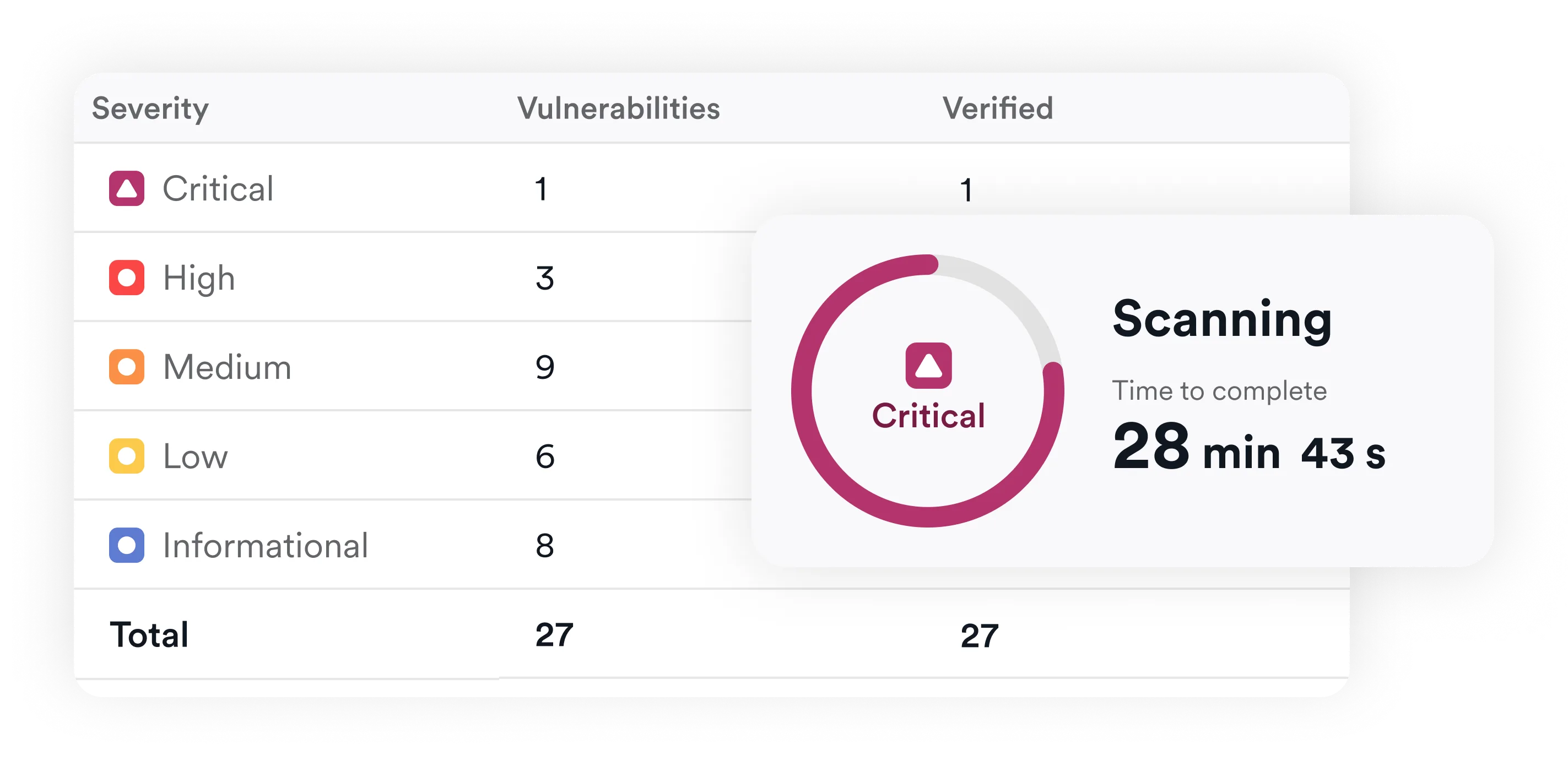
Invicti uses proof-based scanning to safely validate many XSS findings in browser context, giving developers evidence they can use to reproduce and fix issues faster.
Broad coverage across modern applications
Scan for reflected, stored, DOM-based, and blind XSS across JavaScript-heavy applications, authenticated workflows, and API-connected front ends.
Automated workflows that scale with your pipeline
Run XSS scanning in CI/CD pipelines, scheduled scans, ticketing workflows, and centralized AppSec processes through the Invicti Application Security Platform.
Accurate XSS detection with proof, not pattern matching
Many XSS scanners flag suspicious reflections without proving exploitability. That leaves AppSec teams and developers sorting through findings that may be encoded, filtered, or otherwise unable to execute in a real browser session.
Invicti DAST uses proof-based scanning to safely validate many XSS vulnerabilities in application context. For confirmed findings, Invicti provides evidence that malicious script execution is possible, helping developers reproduce issues faster and giving security teams a clearer view of real runtime risk.
Because Invicti tests running applications from the outside in, teams can prioritize exploitable behavior that attackers could actually reach instead of relying only on static assumptions or pattern-matching signals.
Broad XSS coverage for modern web apps and APIs
XSS can appear anywhere user-controlled data reaches the browser: parameters, forms, headers, templates, JavaScript logic, APIs, and back-end workflows that later render content to users. Invicti’s dynamic crawling and scanning engines are built to exercise those runtime paths across modern web applications and APIs.

Automated XSS scanning that fits AppSec workflows
Security teams do not need more unverified findings. They need a way to identify real risk, route it to the right owners, and track remediation without slowing development.
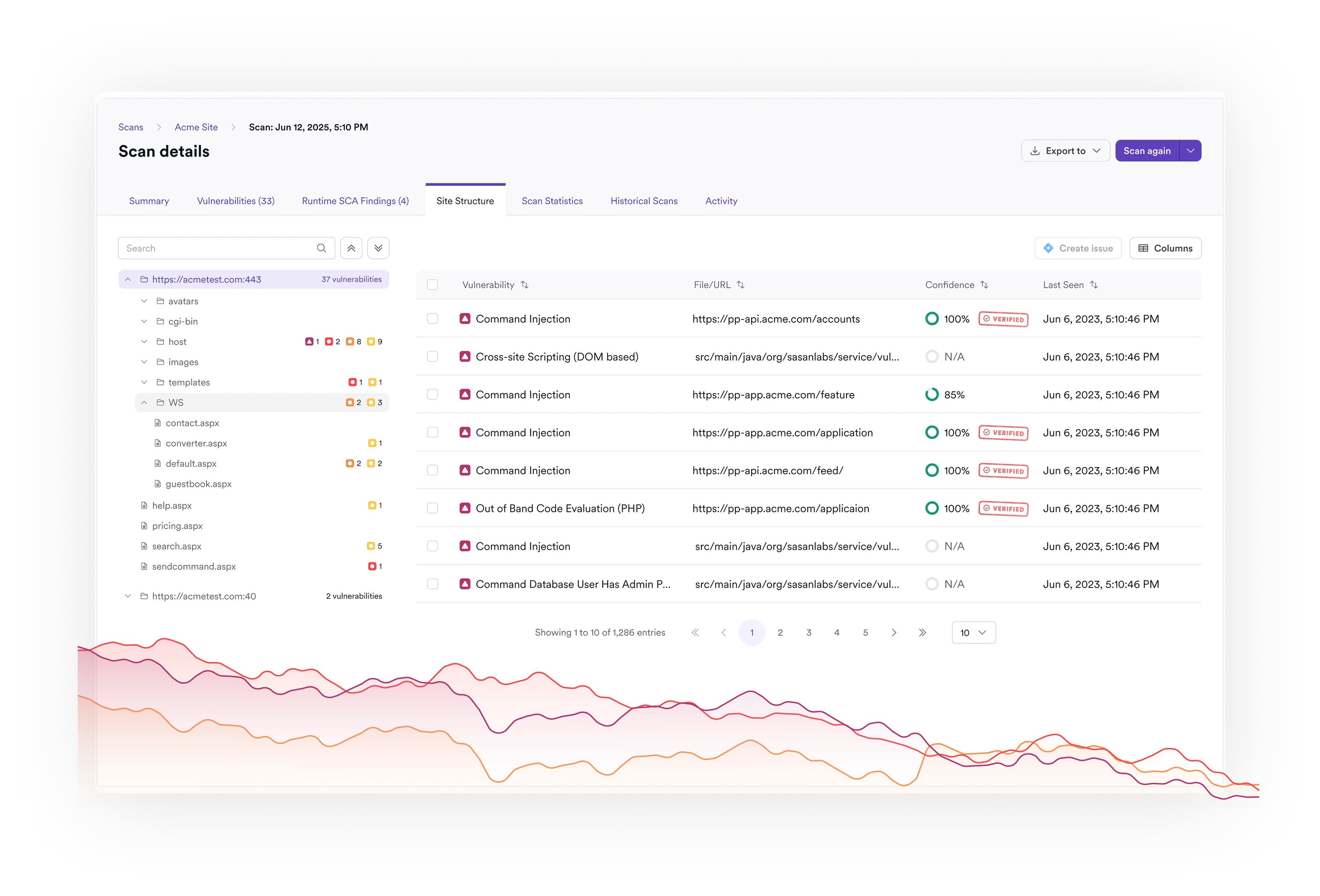
Invicti automates XSS scanning across development, staging, and production workflows so teams can test continuously while keeping results actionable. Confirmed findings can flow into ticketing, triage, remediation, and ASPM workflows where security teams can correlate XSS issues with risks from DAST, SAST, SCA, API security, and other sources.
With a DAST-first approach, Invicti helps teams use runtime validation as a fact check for application security risk – reducing noise, improving prioritization, and helping developers fix the issues that matter most.

Why XSS still matters
Cross-site scripting is still one of the most persistent risks in modern web applications
In the MITRE/CISA 2025 CWE Top 25 Most Dangerous Software Weaknesses, the weakness corresponding to XSS – CWE-79 – ranked #1 for the second year in a row. Microsoft’s Security Response Center also reported that it mitigated more than 970 XSS cases in the space of 18 months, with XSS making up 15% of all Important or Critical MSRC cases in the 12 months leading up to July 2025.
For AppSec teams, the lesson is practical: XSS is not just an old vulnerability class. It continues to appear in modern applications, including single-page apps, cloud-native architectures, and complex browser-based workflows. Continuous XSS scanning helps teams find and validate exploitable issues before attackers can use them.
Integrated with the tools you already use




















What customers say

“For more websites, we now don’t need to go externally for security testing. We can fire up Invicti, run the tests as often as we like, view the scan results, and mitigate to our hearts’ content. As a result, the budget we were spending every year on penetration testing decreased by approximately 60% almost immediately and went down even more the following year, to about 20% of our initial spending.”

“Invicti detected web vulnerabilities that other solutions did not. It is easy to use and set up...”

“I had the opportunity to compare expertise reports with Invicti ones. Invicti was better, finding more breaches.”

“Invicti is the best web application security scanner in terms of price-benefit balance. It is a very stable software, faster than the previous tool we were using and it is relatively free of false positives, which is exactly what we were looking for.”
XSS scanner FAQs
An XSS scanner focuses specifically on the places where user-controlled input can reach browser-executed code. A general vulnerability scanner may test many vulnerability classes, but an effective XSS scanner needs browser-aware testing, payload execution checks, and enough context to distinguish exploitable script execution from harmless reflections.
False positives often happen when a scanner detects a payload reflected in a response but does not confirm that the payload can actually execute as JavaScript. Invicti reduces this noise with proof-based scanning, which safely validates many findings in application context before reporting them as confirmed vulnerabilities.
Yes, but only when the scanner can exercise client-side JavaScript behavior in a real browser-like environment. DOM-based XSS often happens entirely in the browser, so HTTP-only checks can miss it. Invicti uses dynamic testing to scan browser-executed paths in modern web applications.
Teams should prioritize XSS findings based on exploitability, application exposure, affected users, data sensitivity, and business context. Confirmed vulnerabilities should move ahead of unverified findings because they represent real runtime risk. Invicti helps by validating many XSS findings and feeding confirmed issues into broader AppSec workflows for triage and remediation.
Ready to stop chasing XSS false positives?
