
Application Threat intelligence
Prioritize and Eliminate Critical Threats with Confidence
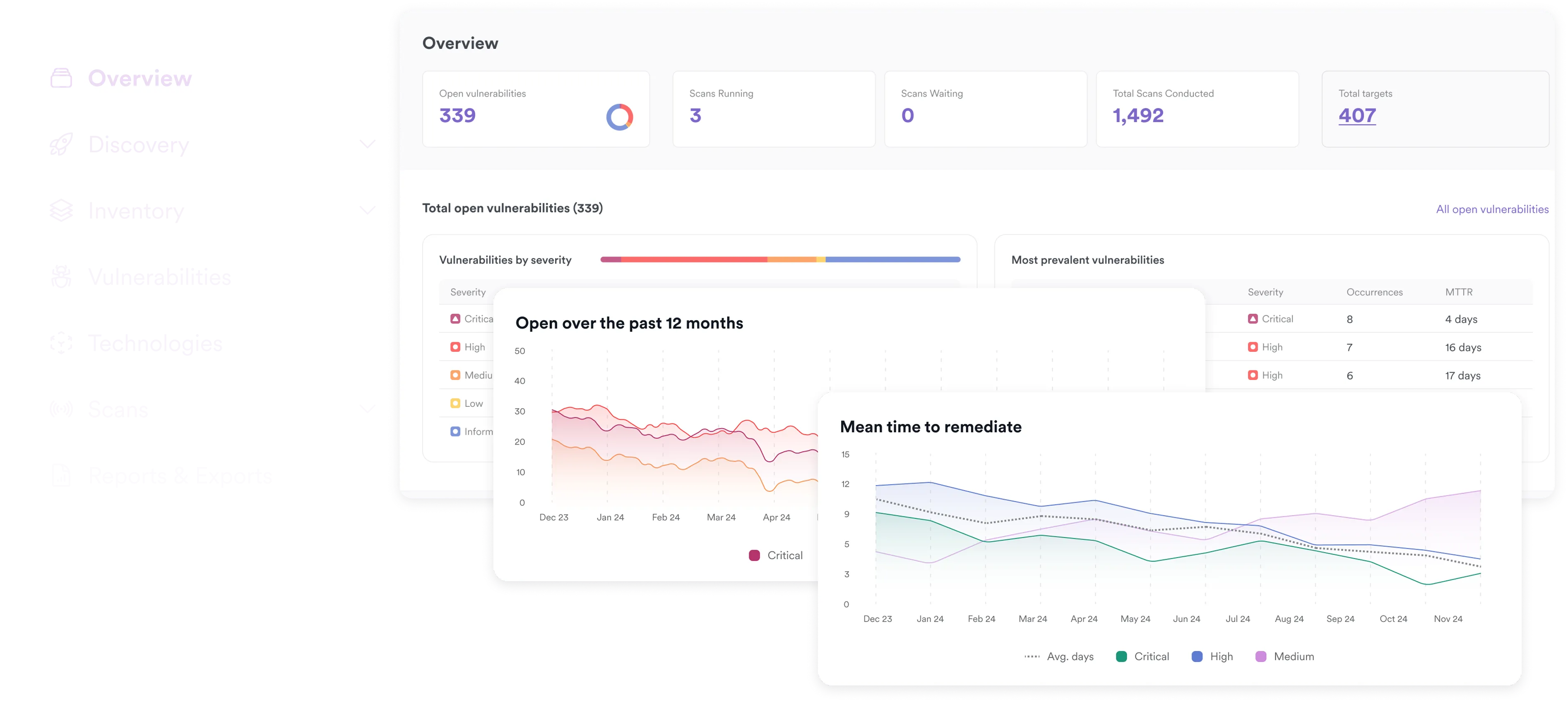
Deduplicate findings, validate reachability, and confirm exploitability. Enrich with business context and EPSS scoring to eliminate noise and expose real risk.
5000+ Top Organizations Trust Invicti







Find real exploits earlier. Remediate faster.
Correlate reachability, exploitability, business impact, and real-world threat intelligence to prioritize what actually puts you at risk.

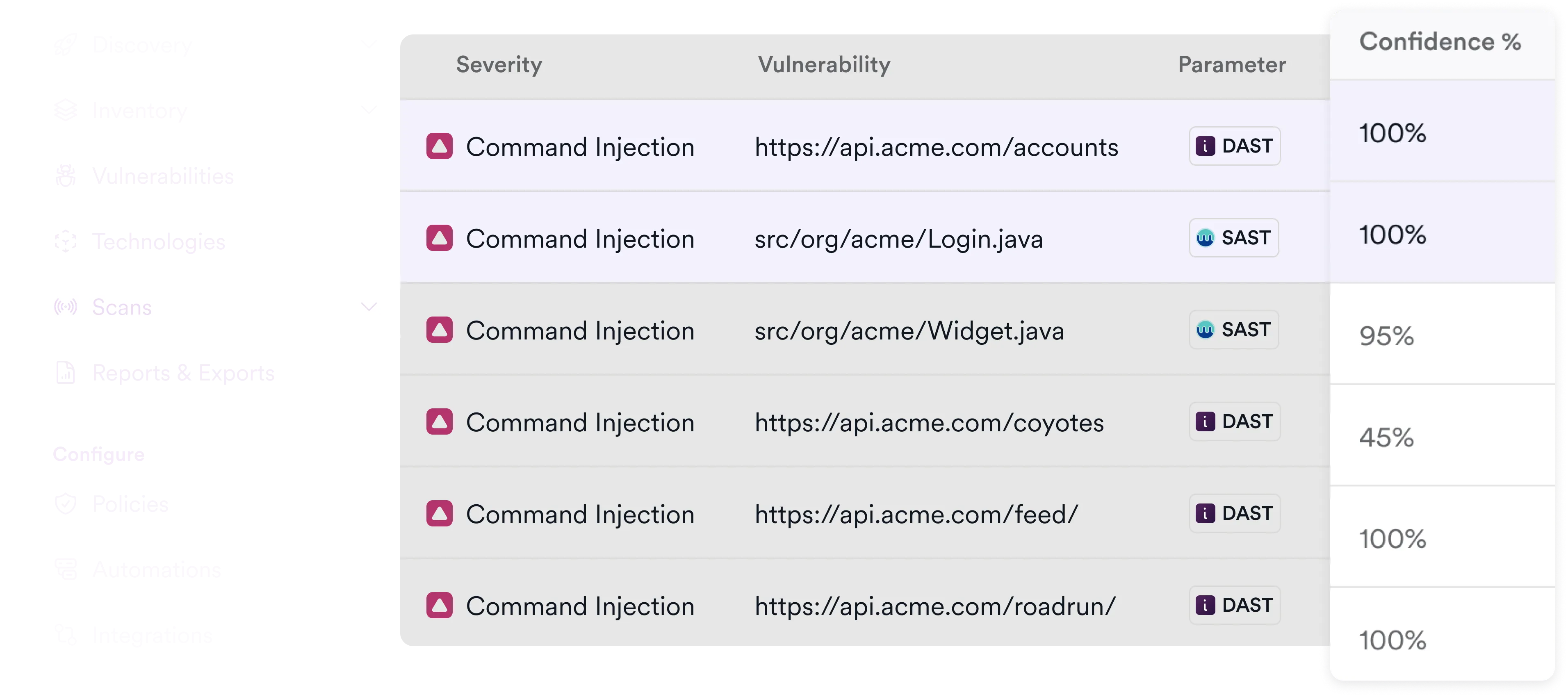
Get signal without noise
Deduplicate findings across scanners for the cleanest set of vulnerabilities.

See what's reachable
Not every critical CVE is reachable in your application. We know the difference.

Prioritize business threats
Validate exploitability with business context to give your team their time back.
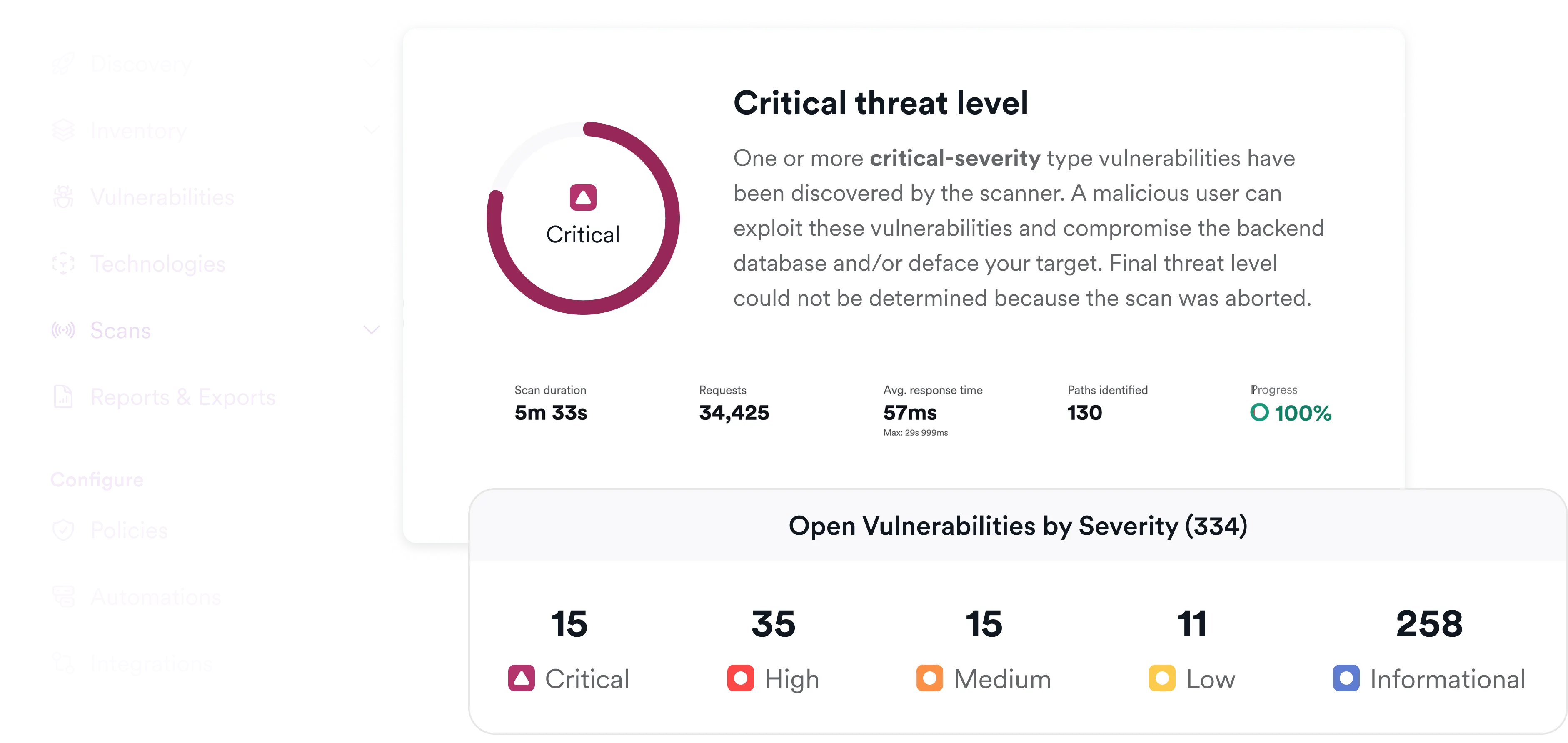
Start with zero noise
Invicti's legacy of industry-leading, zero-noise runtime scanning provides data your team can trust.
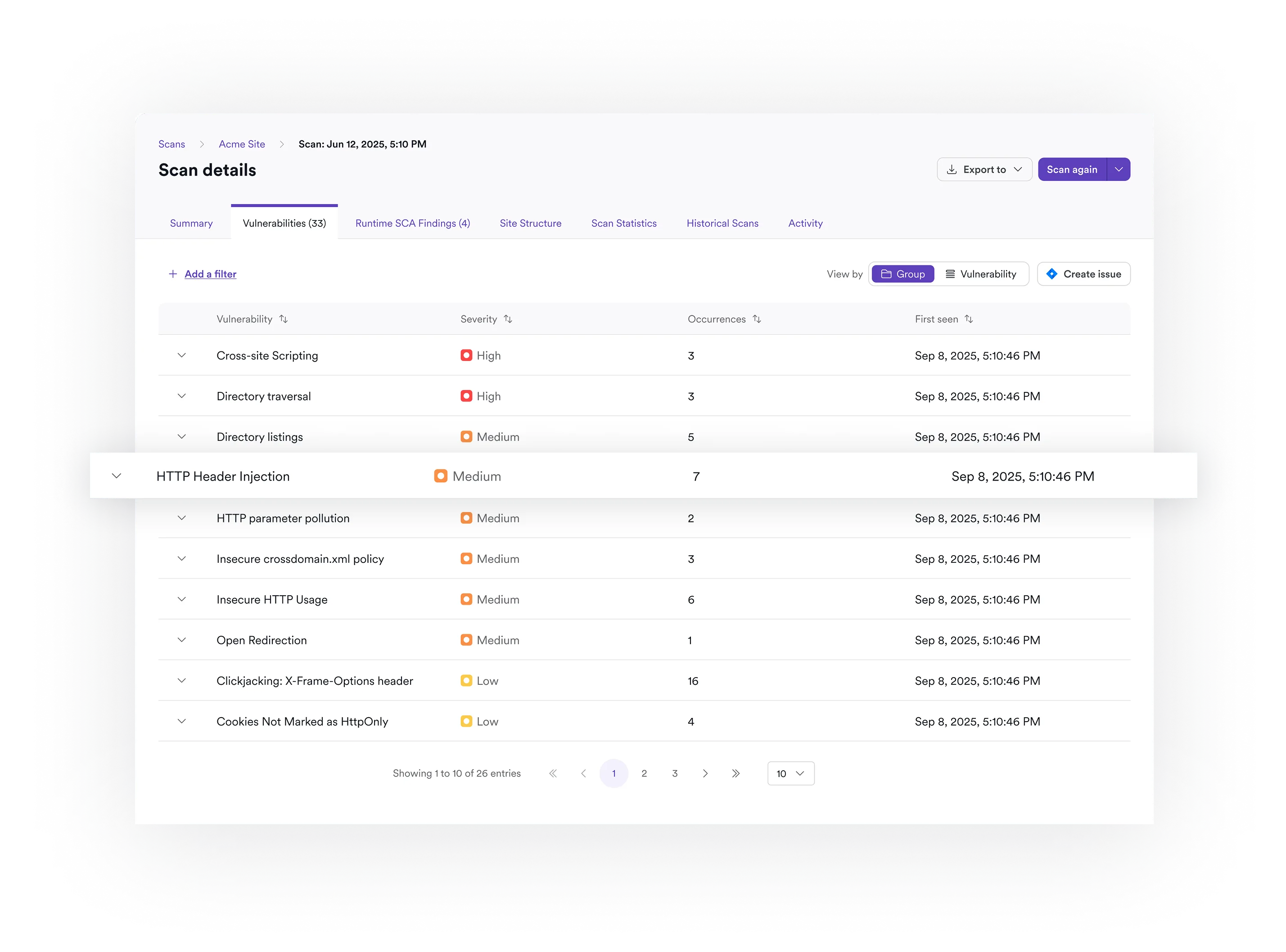
Confirm what's reachable
Your environment is unique and sometimes "critical" vulnerabilities aren't actually executed by your application. Invicti confirms what's reachable.
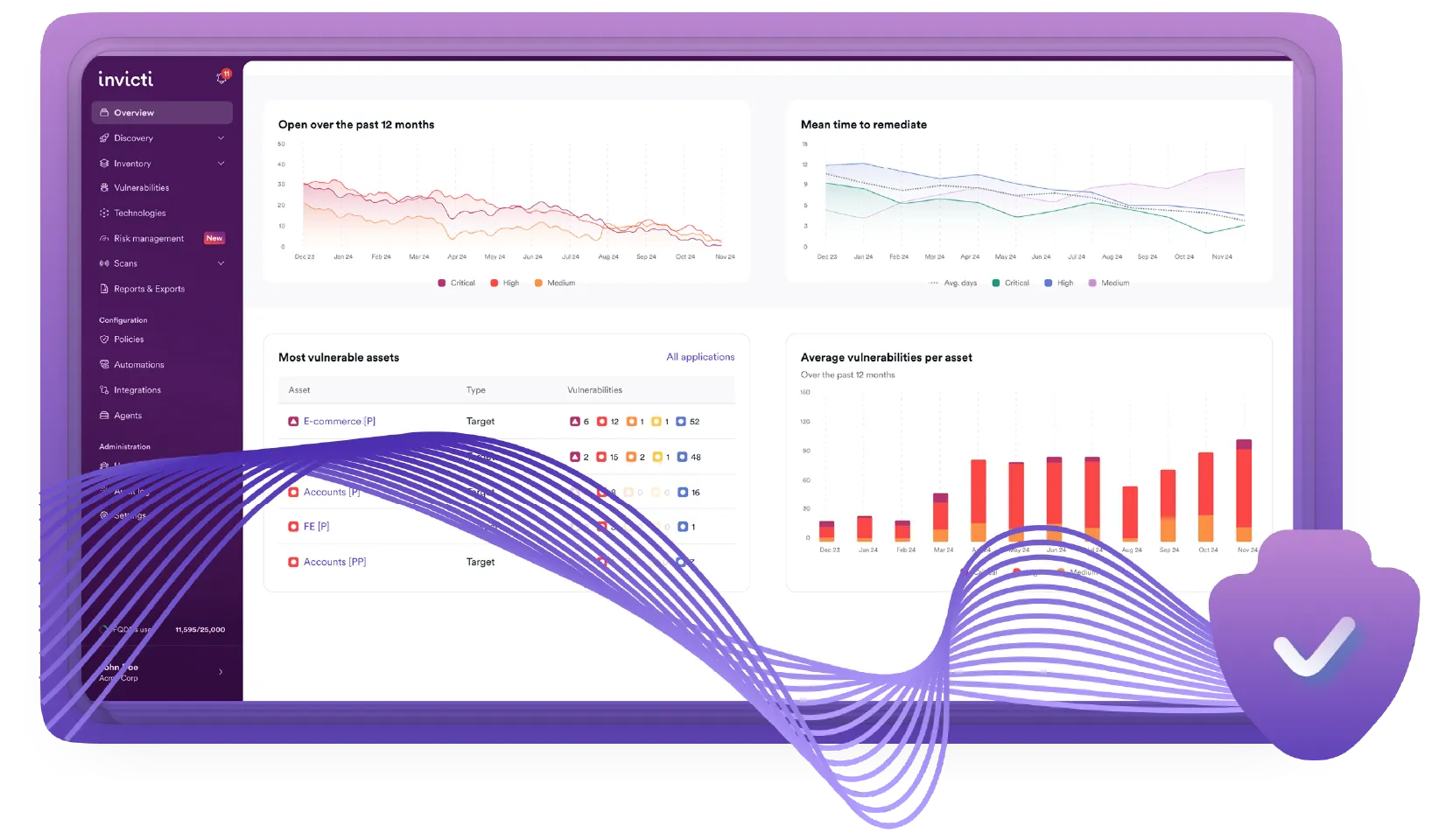
Prove exploitability
Invicti safely exploits vulnerabilities to prove threat criticality with an industry-low rate of false positives.

Prioritize real-world risk
Ensure your team focuses on only the risks that can have a business impact.
What customers say

“For more websites, we now don’t need to go externally for security testing. We can fire up Invicti, run the tests as often as we like, view the scan results, and mitigate to our hearts’ content. As a result, the budget we were spending every year on penetration testing decreased by approximately 60% almost immediately and went down even more the following year, to about 20% of our initial spending.”
– Brian Brackenborough | CISO, Channel 4

“Invicti detected web vulnerabilities that other solutions did not. It is easy to use and set up...”
- Henk-Jan Angerman | Founder, SECWATCH

“I had the opportunity to compare expertise reports with Invicti ones. Invicti was better, finding more breaches.”
- Andy Gambles | Senior Analyst, OECD

“Invicti is the best Web Application Security Scanner in terms of price-benefit balance. It is a very stable software, faster than the previous tool we were using and it is relatively free of false positives, which is exactly what we were looking for.”
- Harald Nandke | Principal Consultant, Unify (now Mitel)
Frequently asked threat intelligene questions
What does threat intelligence mean in AppSec?
At Invicti, threat intelligence means prioritizing vulnerabilities based on real exploitability, reachability within your environment, business context, and real-world exploit likelihood (EPSS)—not just CVE severity or threat feeds.
How does Invicti confirm exploitability?
Invicti uses proof-based DAST to safely exploit vulnerabilities and generate Proof of Exploit (PoE).
This confirms that:
- The vulnerability is real
- It can be triggered
- It produces measurable impact
How does EPSS influence prioritization?
EPSS (Exploit Prediction Scoring System) measures the likelihood that a vulnerability will be exploited in the wild within the next 30 days. Invicti automatically upgrades severity when EPSS indicates active or likely exploitation, ensuring your team focuses on vulnerabilities attackers are actually targeting.
How is this different from traditional cyber threat intelligence (CTI)?
Traditional CTI focuses on dark web monitoring, IoCs, and external threat feeds for SOC teams. Invicti’s threat intelligence is application-focused. We validate whether vulnerabilities are reachable and exploitable in your running applications, then enrich analysis with business impact and EPSS scoring to guide remediation.
What’s the difference between reachability and exploitability?
Reachability determines whether a vulnerable component or endpoint is actually accessible in your deployed application. Exploitability confirms whether that reachable weakness can be successfully abused. Invicti correlates both before elevating risk so theoretical vulnerabilities don’t distract from real exposure.
How does business context affect risk scoring?
Invicti allows organizations to:
- Label applications by business criticality
- Map vulnerabilities to ownership and teams
- Apply SLA-based prioritization rules
- Adjust severity based on asset importance
How does Invicti eliminate false positives?
False positives are reduced through:
- Proof-based exploit validation
- Deduplication across scanners
- Suppression rules with expiration controls
- Corporate vulnerability memory
Featured resources


Trace risk to the source
Secure Attack Surfaces Across the SDLC
