
Severity scores are no longer enough

Security teams face more vulnerability findings than they can investigate. To prioritize, teams must know an issue is reachable, exploitable, and important to the business.

Too many potential threats

Large backlogs make it harder to identify the findings that need attention.

Limited proof of exploitability

Security teams spend time investigating vulnerabilities without conclusive evidence.

Unclear business impact

Technical severity alone doesn't show which exposed systems matter most.

Slow security response

Unverified findings and manual handoffs delay action on real risks.

Know what's exploitable before choosing what to fix

Invicti combines offensive testing, runtime validation, and application intelligence to help security teams distinguish confirmed vulnerabilities from potential risks and set defensible remediation priorities.
Continuously uncover exploitable risks

Identify security weaknesses across running applications and APIs with automated offensive testing.

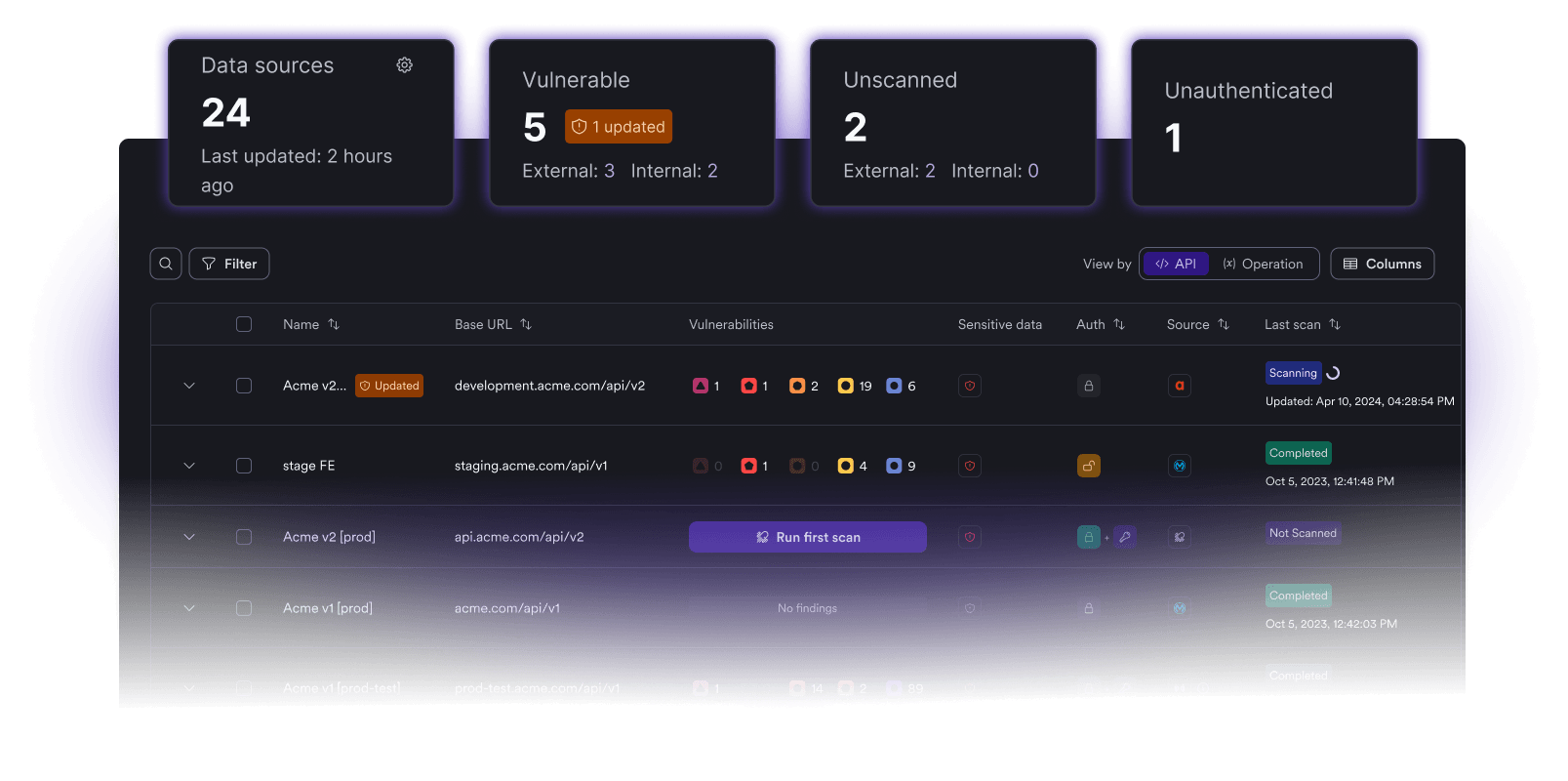
Continuously assess your attack surface with automated DAST and scheduled security scans.

Find vulnerabilities attackers could exploit by testing live application behavior, workflows, and API endpoints.

Go deeper with agentic pentesting to extend offensive testing with AI-driven exploration and analysis.

Reduce manual testing effort with repeatable assessments that help security teams identify new risks as applications change.

Validate vulnerabilities with runtime proof

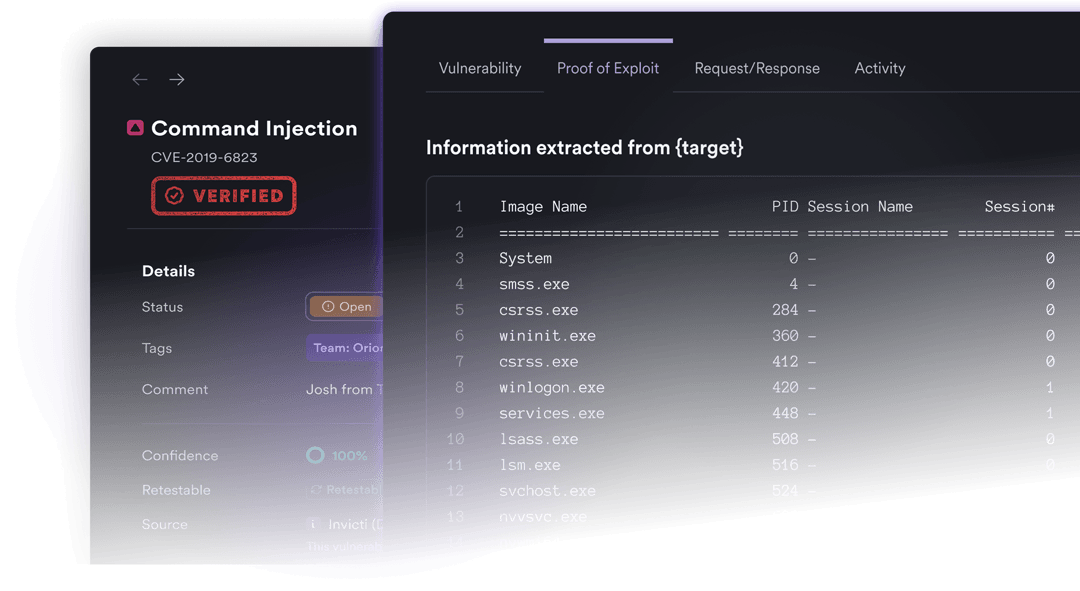
Separate exploitable vulnerabilities from potential risks with evidence from running applications.

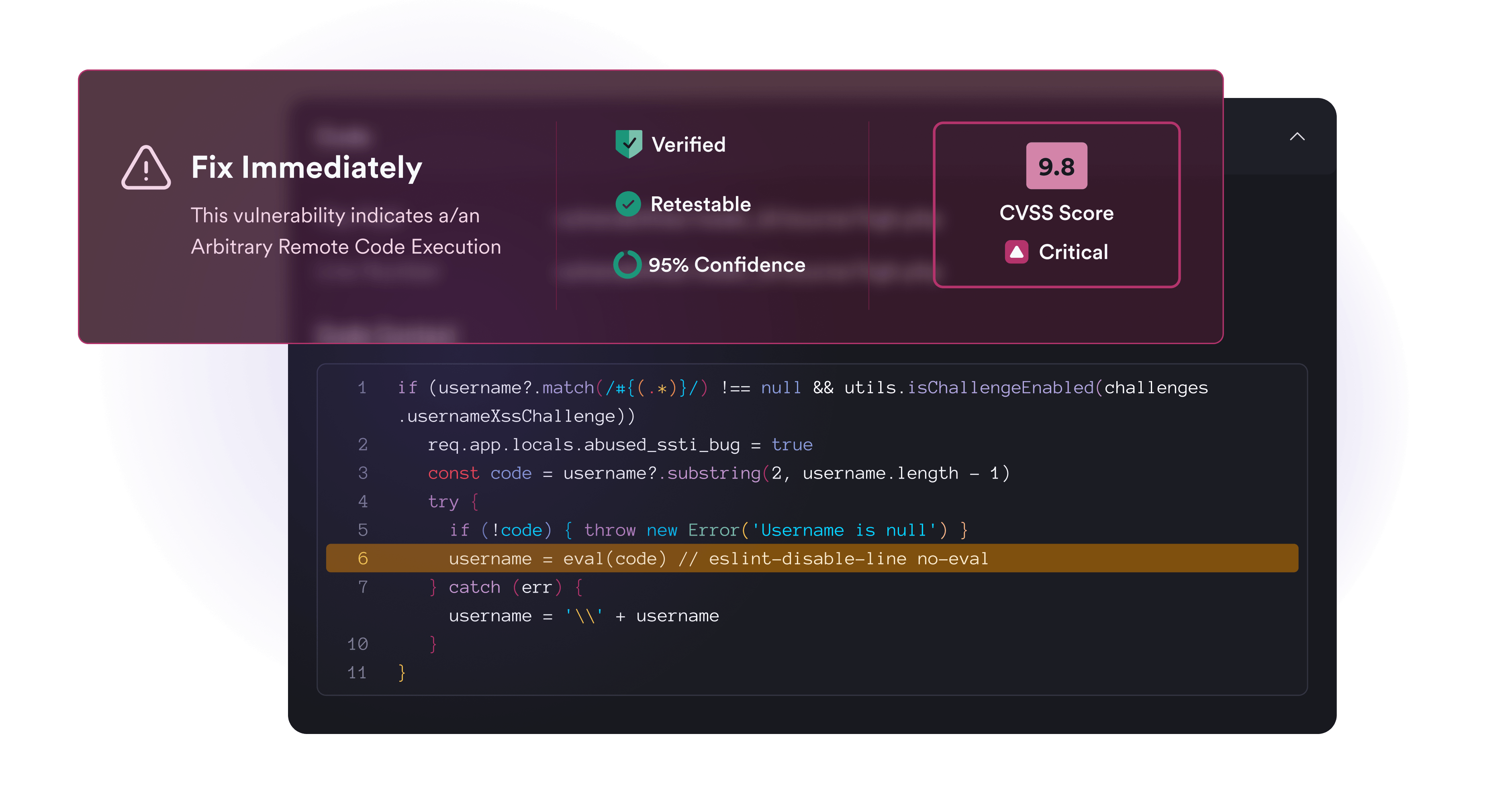
Automatically confirm exploitability for supported vulnerabilities using proof-based scanning.

Reduce manual verification with reproducible evidence of real security weaknesses.

Correlate DAST and SAST findings to connect validated vulnerabilities to source code.

Give security teams confidence in their findings with technical proof of exploitability.

Prioritize the vulnerabilities that pose real risk

Focus security efforts on the threats that matter most using runtime evidence and risk intelligence.

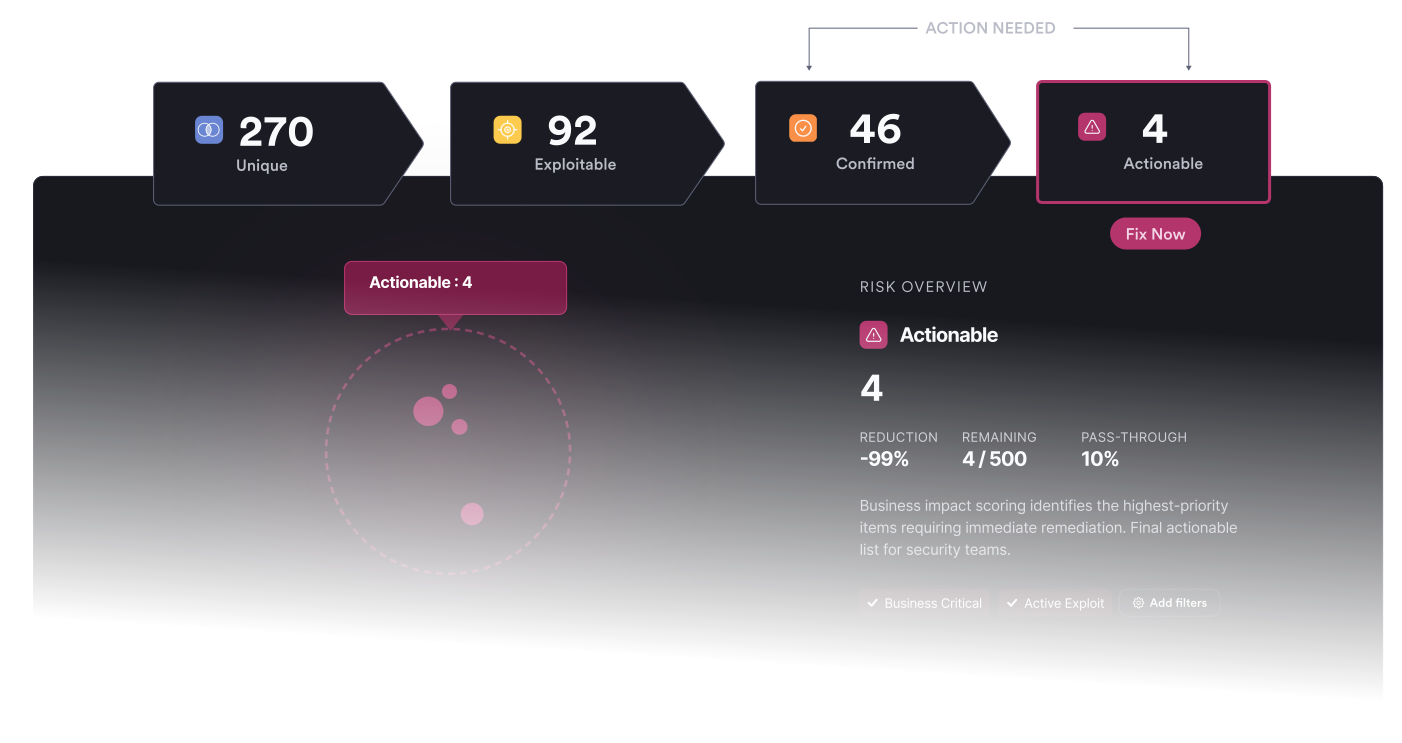
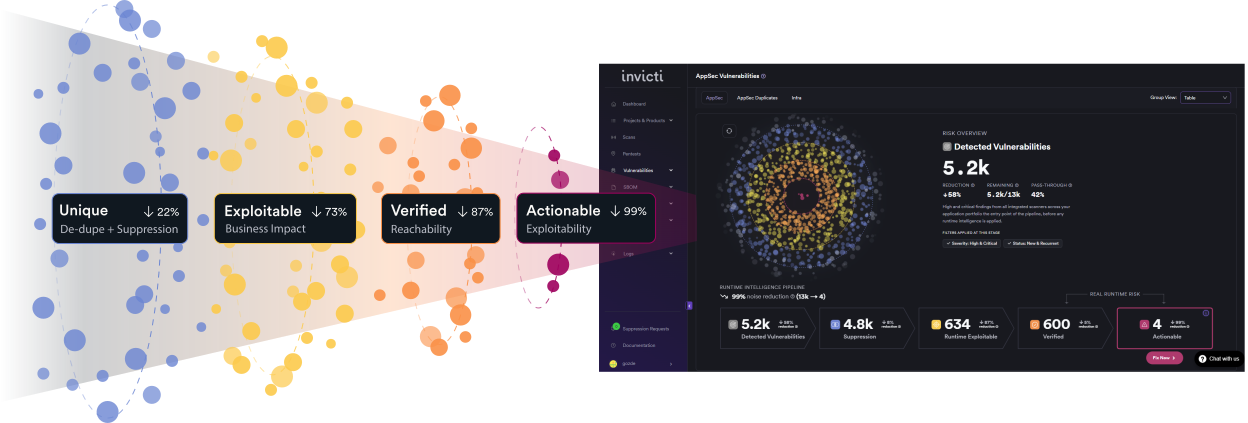
Prioritize vulnerabilities based on exploitability, reachability, and business impact.

Use threat intelligence and exploit likelihood to identify high-risk findings.

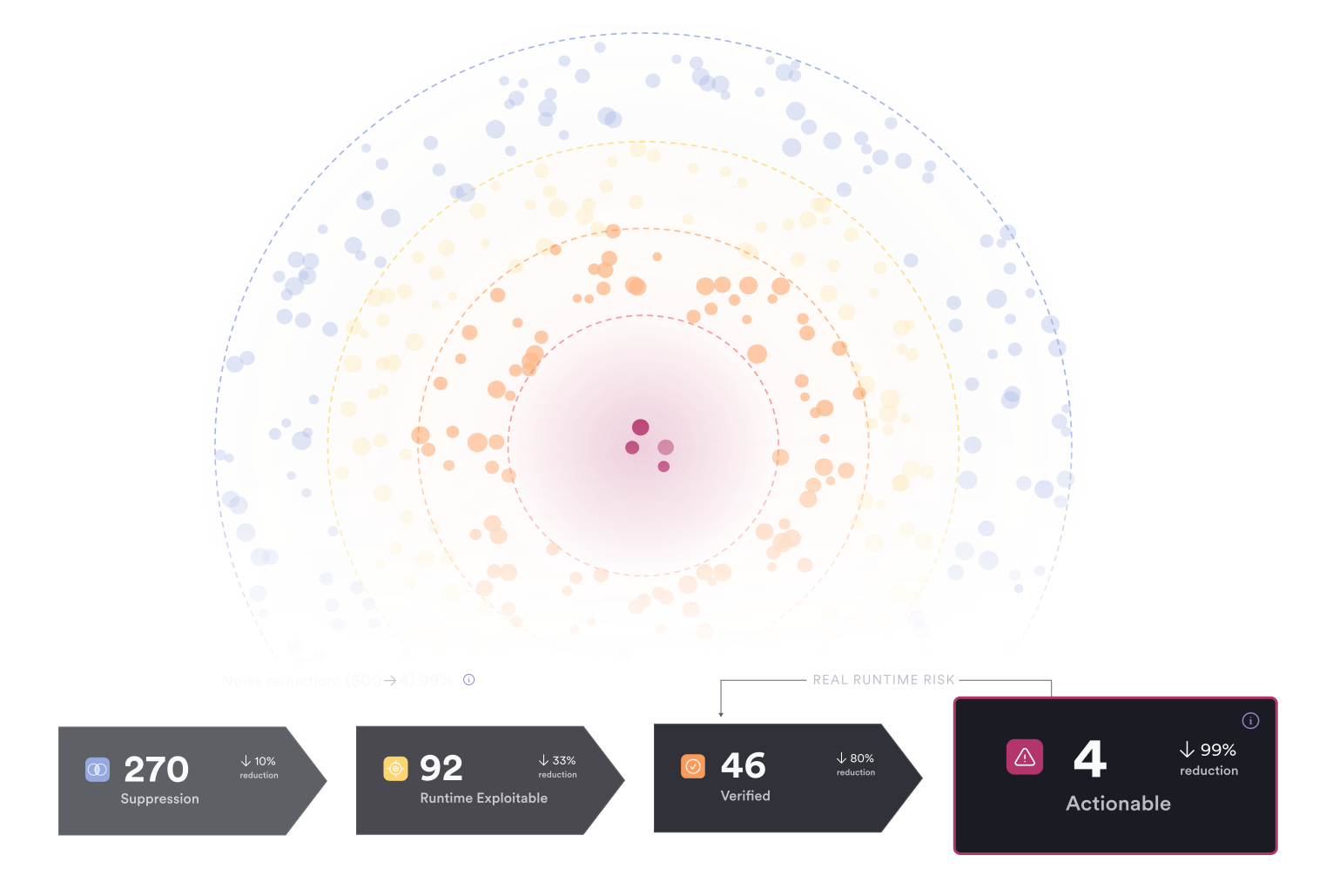
Cut through duplicate findings and scanner noise with intelligent correlation.

Focus remediation efforts on the exposures that present the greatest risk.

Turn priority into remediation

Get the right vulnerability to the right developer with context.

Push prioritized findings into existing CI/CD and developer workflows.

Give developers precise remediation guidance and source-code context.

Use AI-assisted remediation to accelerate fixes without adding AppSec headcount.

Track remediation and validate fixes so security teams know risk has actually been reduced.

“We can fire up Invicti, run the tests as often as we like, and mitigate to our hearts’ content. The budget we were spending every year on penetration testing decreased by approximately 60% almost immediately …

Brian Brackenborough, Chief Information Security Officer, Channel 4

“As opposed to other web application scanners we used, Invicti is very easy to use and does not require a lot of configuring. An out of the…

Perry Mertens, Audit Supervisor, ING Insurance EURAsia IT Audit Team

“Start integrating Invicti into your process and you’ll be surprised at how much time it saves you and how much ‘auto magic’ it brings to your entire development pipeline …

Ken Schirrmacher, CTO and Senior Director of IT, Park 'N Fly, Inc.

Ready to finally clarify your priorities?

  • Connect risk to exact code paths with DAST-to-SAST correlation.
  • Automate handoff into developer workflows with tickets, policies, and CI/CD integrations.
  • Verify the fix actually worked with retesting and runtime validation.
Get a demo
Your information will be kept private

Thank you!

Oops! Something went wrong while submitting the form. Please try again.

Frequently asked vulnerability prioritization questions

How does Invicti determine whether a vulnerability is actually exploitable?

Invicti combines static findings with runtime context from DAST. When a SAST finding is confirmed exploitable by DAST, it can be elevated in priority; findings without supporting runtime evidence can be deprioritized. Reachability and business-impact context are then applied to generate a shorter list of real risks.

What role does reachability play in vulnerability prioritization?

Reachability helps determine whether vulnerable code or components are actually part of an executable path in the application. Invicti combines reachability with exploitability and business-impact context so teams can distinguish theoretical exposure from risk that is more likely to affect a running application.

How does DAST-to-SAST correlation improve prioritization?

Invicti overlays DAST and SAST findings onto dependency call graphs to correlate verified runtime vulnerabilities with the code paths that expose them. This allows teams to prioritize SAST findings that are tied to proven runtime risk and give developers exact code-level remediation context.

How does Invicti correlate findings across multiple AppSec scanners?

Invicti uses intelligent correlation and deduplication to merge related findings across DAST, SAST, SCA, container security, and other scanners. This prevents the same underlying issue from appearing as multiple separate alerts and creates a more unified view of application risk.

How is DAST used differently from static risk scoring?

Static analysis and contextual signals can estimate whether a vulnerability is likely to matter. DAST adds outside-in runtime evidence by testing the running application and confirming exploitability where possible. That runtime validation acts as an additional layer of proof rather than relying on severity or static context alone.

How does business context affect vulnerability priority?

Business context helps distinguish two technically similar findings that carry very different organizational risk. Application criticality, project context, exposure, sensitive data, and other business factors can be used alongside technical signals to determine which vulnerabilities should move to the top of the remediation queue.

How does Invicti turn prioritization into remediation?

Invicti connects prioritized findings to developer workflows by mapping findings to vulnerable code locations, providing context-aware guidance, and integrating with source repositories and issue-tracking workflows. The goal is to move directly from prioritized risk to a developer-ready fix.