How API discovery works
Invicti correlates discovery data from source code, network traffic, API gateways, and web applications to continuously maintain a complete API inventory for scanning.
Automatically uncover APIs through application scanning, gateways, network traffic, and source code. Reduce manual discovery work and bring more endpoints into security testing.
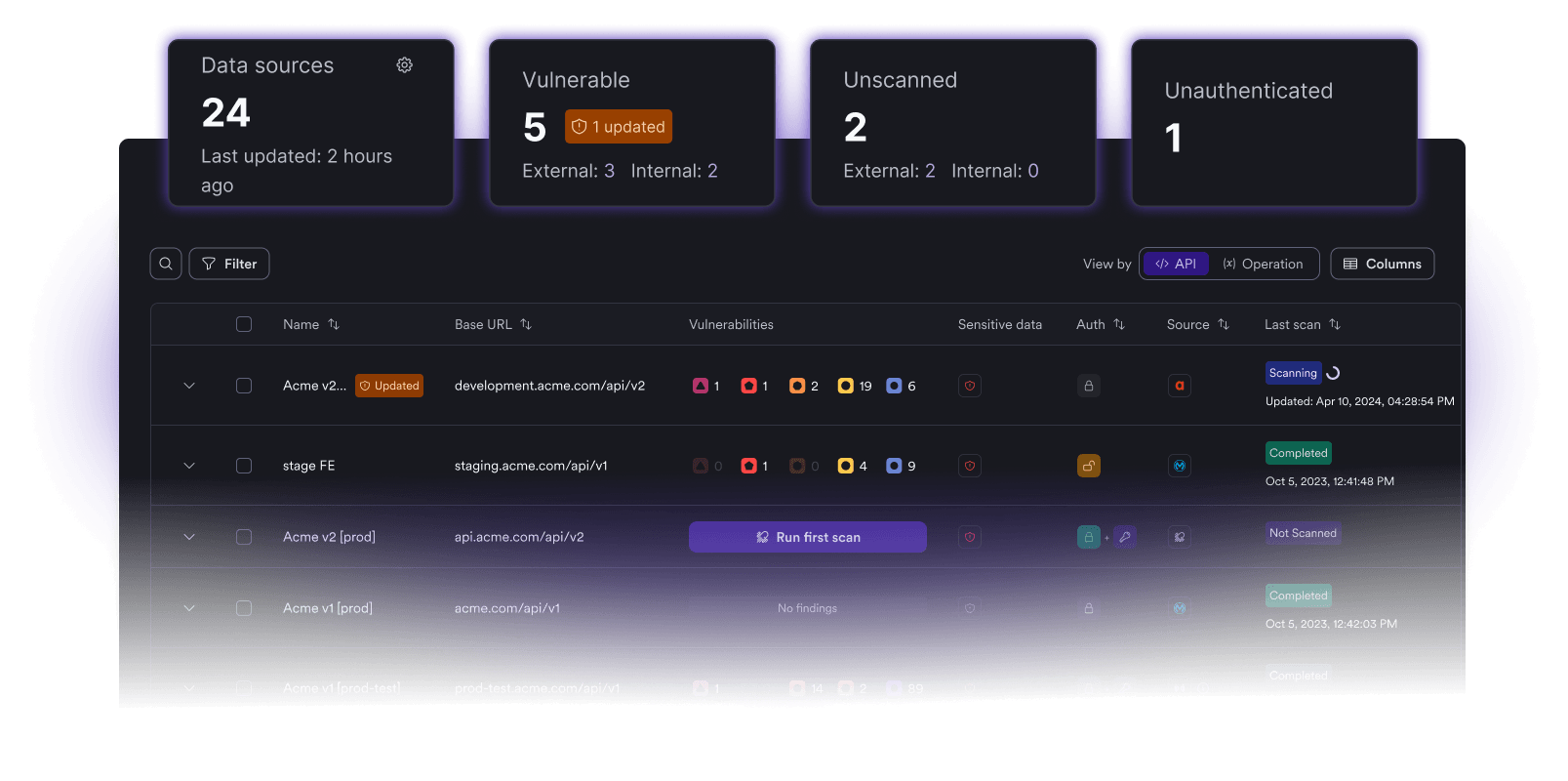


Security teams lack an accurate record of the APIs they own and need to assess.

SecOps needs manually supplied specifications and authentication details.

New APIs and endpoints appear faster than security teams can inventory them.

Web crawling and monitoring alone miss APIs that aren't linked to a UI or actively used.


Invicti correlates discovery data from source code, network traffic, API gateways, and web applications to continuously maintain a complete API inventory for scanning.
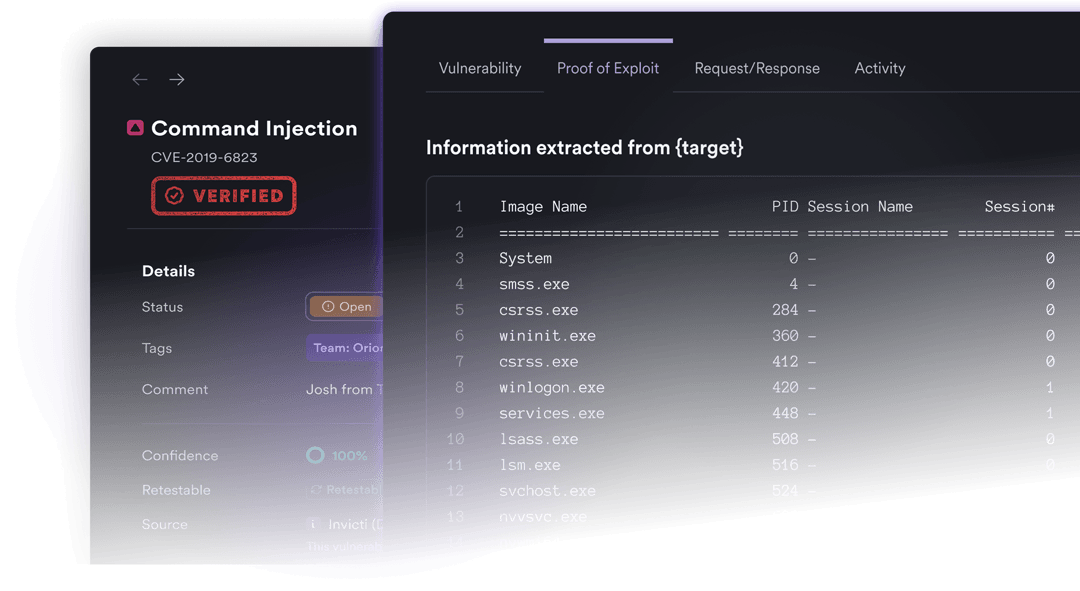
Use Invicti's DAST engine to automatically identify API endpoints during web application scans. Discover APIs exposed through application interfaces without installing additional sensors or manually supplying API specifications.
Connect Invicti to supported API gateways to retrieve endpoint information and specifications. Identify deployed APIs without relying solely on developer-maintained inventories.
Integrate with:
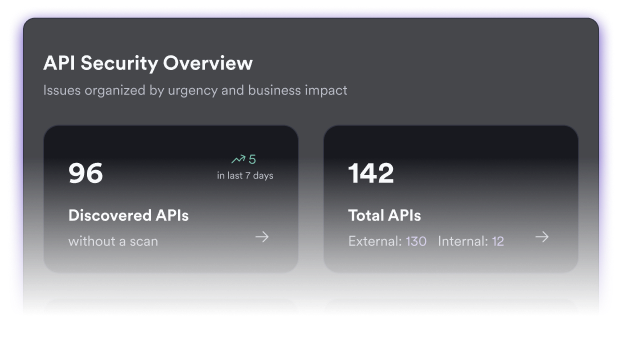
Analyze API activity across supported network infrastructure to discover active endpoints that application crawling might miss. Extend visibility into undocumented APIs running in production.
Detect activity across:
Discover API endpoints directly from source code, including those not yet deployed. Generate specifications when documentation is missing to expand API visibility and testing coverage.








“We can fire up Invicti, run the tests as often as we like, and mitigate to our hearts’ content. The budget we were spending every year on penetration testing decreased by approximately 60% almost immediately …


“As opposed to other web application scanners we used, Invicti is very easy to use and does not require a lot of configuring. An out of the…


“Start integrating Invicti into your process and you’ll be surprised at how much time it saves you and how much ‘auto magic’ it brings to your entire development pipeline …


Invicti uses multi-layer API discovery to identify endpoints across your environment. The platform gathers API information from web application scans, API gateways, network traffic analysis, and source code repositories. By correlating these discovery sources, Invicti builds a complete API inventory without requiring developers to manually provide schemas or endpoint lists.
Yes. Invicti can connect directly to source code repositories such as GitHub, GitLab, and Bitbucket to identify APIs defined in code. This allows APIs to be discovered earlier in the development lifecycle so security testing can begin before deployment.
Invicti can detect and work with common authentication mechanisms such as tokens, cookies, and OAuth. During discovery and scanning, the platform identifies authentication patterns and uses them to perform authenticated testing of API endpoints.
Yes. Invicti integrates with CI/CD pipelines and development repositories to detect new or modified APIs as applications evolve. Newly discovered APIs are automatically added to the inventory and prepared for security testing.
Invicti can discover many types of APIs, including:
This allows security teams to identify APIs that may not appear in documentation or application inventories.
No. Many API security tools require developers to manually provide OpenAPI or Swagger specifications before testing can begin. Invicti automatically extracts or reconstructs API schemas from discovery sources such as code, gateways, and network traffic. This removes the need for manual setup.
API monitoring tools primarily analyze runtime traffic to detect attacks or suspicious activity. Invicti focuses on proactive API security testing. The platform discovers APIs across multiple sources and then actively tests them for vulnerabilities such as those listed in the OWASP API Top 10.
Once APIs are identified, Invicti automatically prepares them for testing by extracting or generating API schemas and mapping endpoint relationships. The APIs are then passed to the DAST engine, which scans them for vulnerabilities such as broken access control, injection flaws, and authentication weaknesses.